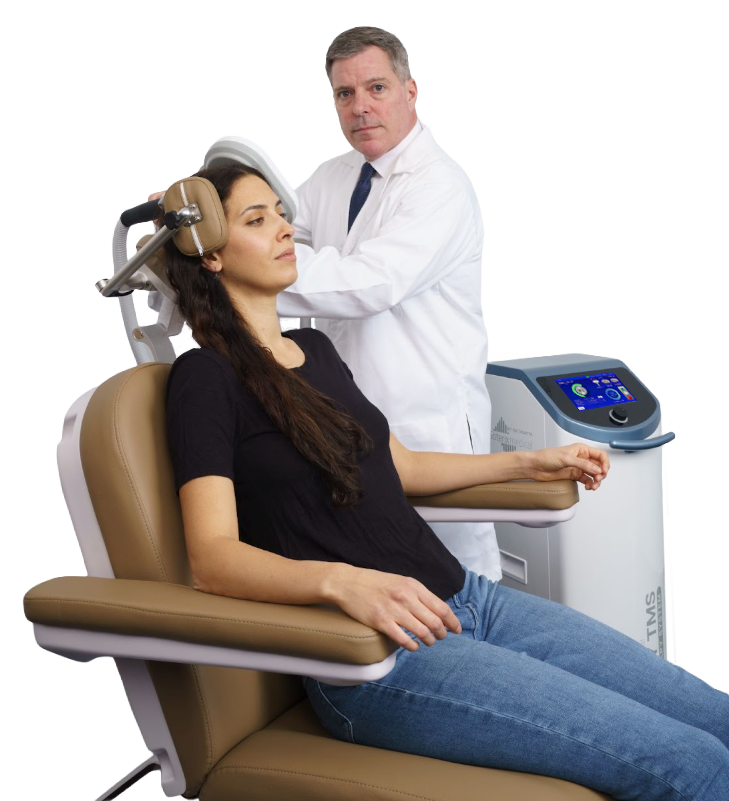
What is Transcranial Magnetic Stimulation (TMS)?
Transcranial Magnetic Stimulation (TMS) is a non-invasive neuromodulation therapy that uses targeted magnetic pulses to activate specific brain regions involved in mood regulation. Unlike medications, TMS directly engages neural circuits without systemic side effects or the need for anesthesia, and patients remain awake and able to resume daily activities immediately after treatment.
How TMS Works
TMS delivers focused magnetic stimulation through a coil placed against the scalp. These magnetic pulses stimulate neural activity in areas of the brain linked to emotional processing and cognitive function, helping to strengthen communication within key neural pathways. This mechanism provides a therapeutic alternative for individuals who have not experienced sufficient benefit from antidepressant medications or cannot tolerate them due to side effects.
TMS treatments typically take a few minutes per session and are administered over multiple sessions across several weeks, depending on the specific clinical plan.
Expanding Clinical Practice with TMS
Transcranial Magnetic Stimulation (TMS) is one of the fastest growing evidence based treatments in mental health care. FDA cleared as a safe and effective therapy for major depressive disorder (MDD), TMS provides clinicians with a rigorously evaluated, non-invasive option supported by extensive scientific research. Its proven clinical effectiveness has led more providers to integrate TMS into their practices, expanding treatment offerings for patients while ongoing studies continue to explore additional applications across neuromodulation and mental health care.