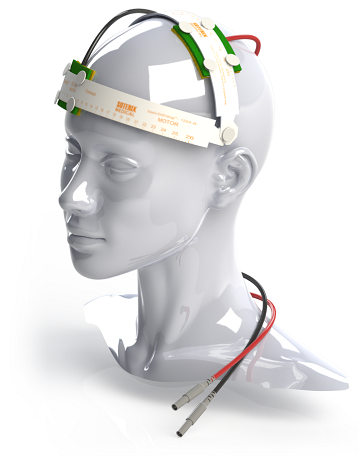
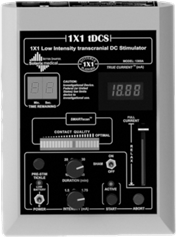
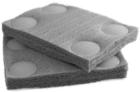
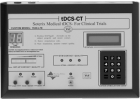
The Soterix Medical 1×1 tDCS stimulators and accessories is the first platform designed by researchers and biomedical engineers for transcranial Direct Current Stimulation. The 1×1 remains the only platform with custom features allowing simple to use and reproducible set-up, electrodes and headgear (including the exclusive EasyPads™ and EasyStrap™) designed and tested for tolerability, and software driven Neurotargeting.
The 1×1 (one anode and one cathode) line of Soterix tDCS devices provide the most advanced stimulation technology in an intuitive user interface.
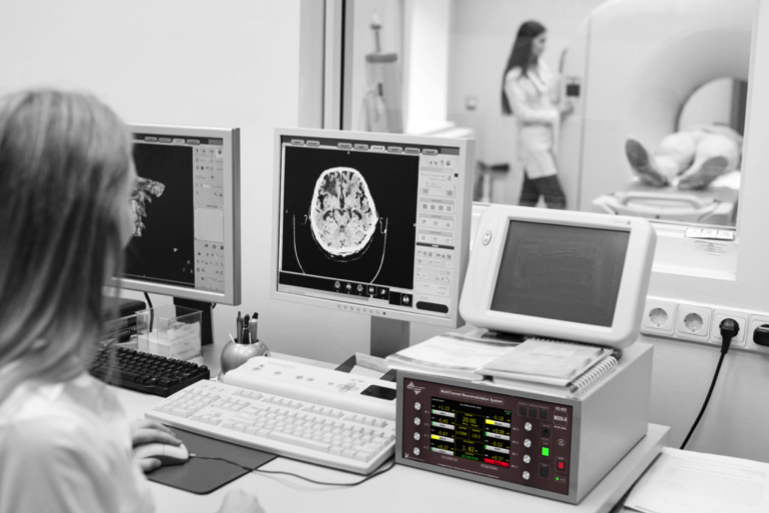
Physicians at Harvard Medical School demonstrate the application of tDCS using a Soterix 1x1 tDCS device.
In 2008, when Soterix Medical was founded to support clinical research on tDCS, no device included features designed for tDCS, no electrodes designed for consistent tDCS were available, head-gear was limited to rubber-bands, and researchers did not have access to any software to guide current to targeted regions. In 2013, Soterix Medical continues to set the standard for design and innovation in tDCS.
Clinicians and researchers choose the Soterix Medical 1×1 systems to:

Transcranial Direct Current Stimulation (tDCS) is a non-invasive procedure in which a device sends a small Direct Current (DC) across the scalp to modulate brain function. The Soterix Medical 1x1 tDCS Low-Intensity Stimulator sends a low-level current from the positive electrode, anode, to the negative electrode, cathode. When the extremely low level current passes from the anode to the cathode, it may simultaneously increase the activity of the brain by the anode and decrease the activity of the brain near the cathode.
tDCS mechanisms are considered to result from the ability of very weak DC currents to safely induce reversible changes in cortical plasticity. The induction of lasting changes in cortical excitability can, under some conditions, reversibly modify behavior and interact with normal learning. Such findings have driven a large number of studies examining whether tDCS might induce functionally significant changes in patients with a large variety of neurological and psychiatric disorders.
tDCS dose can be defined as: 1) The size and position of the electrodes on the body and 2) The duration (in minutes) and intensity (in mA) of current passed across the electrodes. Soterix Medical tDCS systems allow precise reproduction of tDCS doses commonly used in medical literature. Soterix Medical engineers can work with you to determine the best configuration for your application. tDCS is an investigational technique and it is the responsibility of the operator to determine the appropriate tDCS dose.
tDCS safety is supported by medical literature to have common side effects limited to mild and reversible skin irritation, when using standard tDCS protocols and guidelines. Soterix Medical tDCS stimulators and electrodes are uniquely designed to minimize skin irritation – for example,the exclusive SMARTscan feature provides a simple indicator to the operator of the contact conditions before, during, and after stimulation. tDCS is an investigational technique and it is the responsibility of the operator to identify and follow the most appropriate safety protocols.
tDCS comfort can be controlled by the operator by using devices, such as the Soterix Medical 1x1 tDCS Low-Intensity Stimulator, which are specifically designed for clinical tDCS. For example, the unique PRE-STIM TICKLE and RELAX features available on all Soterix Medical 1x1 models are designed to condition the skin prior to stimulation and allow the operator to accommodate subject feedback without stopping stimulation.
Conventional tDCS uses one anode and one cathode (1×1) with tremendous possibilites for customization and optimization. The Soterix Medical 1×1 provides clinicians with the right solution. The selection of the right stimulator for your objectives is central for rational tDCS.
Each Soterix Medical 1×1 feature was developed by our team of biomedical engineers consulting closely with leading clinical centers. Designed to simply set-up, provide intelligent warning of a fault condition, and allow for adjusting for patient comfort , these features facilitate reliable and tolerated tDCS. The Soterix Medical SmartScan™ feature is central in all tDCS devices to allow reliable set-up and monitoring.
Provides a continuous visual indication of electrode quality before and during stimulation.From pre-stimulation set-up, to during stimulation monitoring, to post-stimulation confirmation, the Soterix Medical SmartScan™ feature provides an intuitive and clear indication of electrode contact quality. Use the SmartScan™ during set-up to adjust electrodes and head-gear for optimal fit. During stimulation, SmartScan™ provides a constant indication of electrode quality and can be monitored during adjustments (e.g. addition of saline to drying electrodes). After stimulation, SmartScan™ confirms a successful trial. Because “resistance” is not meaningful for tDCS, SmartScan™ was developed by Soterix Medical engineers to provide clinical investigators with a simple to read indication of contact quality. |
Clearly indicates the actual current supplied at the moment.What other devices promise, the 1×1 tDCS delivers. The back-lit display can be monitored during stimulation ramp up and to confirm target current intensity is achieved. |
May be used to supply a very weak current prior to tDCS to help condition the skin.Tickle™ may be used to both condition skin prior to tDCS or for naïve subject anxious about stimulation. A custom on-off waveform pattern generates mild and brief sensation under electrodes. |
Allows the clinician to use a simple sliding bar to transiently decrease the current from the pre-set value, for example based on subject feedback.Based on feed-back from leading clinical centers, Soterix Medical exclusive feature Relax™ accommodates subjects who may be anxious when stimulation is initiated or during the course of stimulation. The Relax™ slider may be adjusted from full to reduced intensity based on subject perception without interrupting or aborting stimulation. |
For susceptible subjects, Limited Total Energy minimize power and energy deliveryLimited Total Energy for tDCS (LTE-tDCS) was developed exclusively by Soterix engineers. LTE limits the voltage and power required for tDCS through the use of adaptive ramp-up stimulation and intelligent energy management for currents up to 1.5 mA. |
Full integrated clinical trial support with subject codes and customized sham protocolsDeveloped to support multi-center clinical trials in tDCS. Double Blind from Soterix optimize well beyond traditional ramp up/down shams. For true operator blinding, device operation must balance providing a continuous indication of stimulation and electrode quality status for safety, without betraying whether the stimulation session is real or sham. Since “one size does not fit all”, Soterix Medical scientists work with you to customize Double Blind to you active protocol and electrode montage. |
A simple feature that minimizes dropout in double-blind clinical trialsSometimes trivial issues require stimulation interruption or adjustment. Rather then abort a session which can result in subject exclusion or data confounds, the PAUSE feature was developed in collaboration with clinical trial experts running higher-volume or longer duration trials. For both automatic (under SmartScan) and user initiated PAUSE, this exclusive feature intelligently avoids breaking sham even in double-blind trials. |
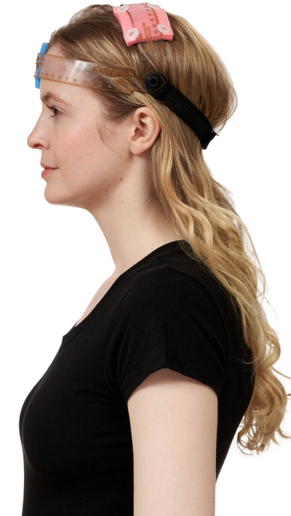
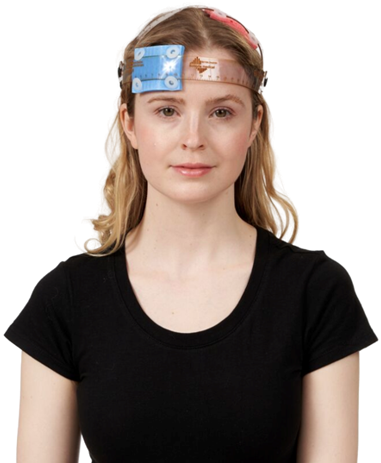
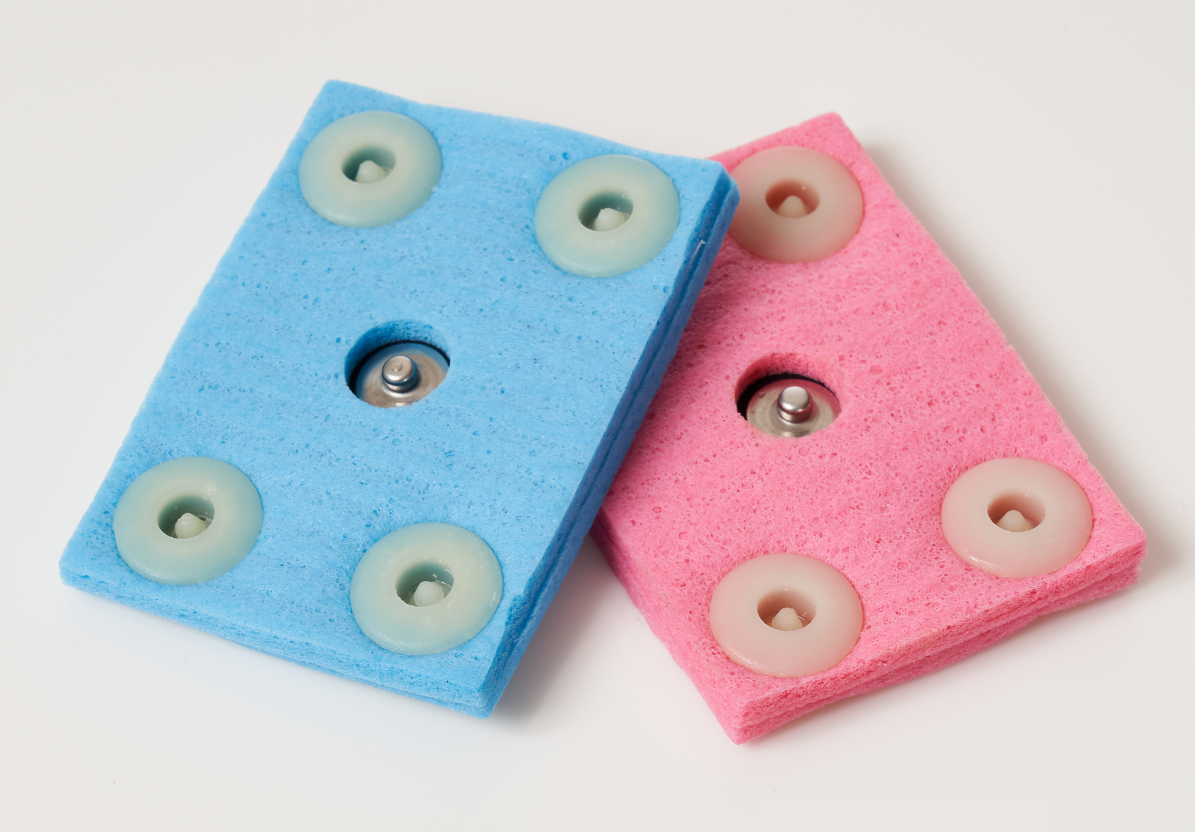
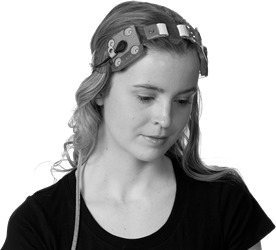
Every tDCS 1×1 accessory is optimized for simple and consistent set-up, robust and safe performance, and ease of use. "One size does not fit all" in tDCS, and the 1×1 accessory set provides the flexibility to optimize performance. For EasyPads™ to EasyStraps™ Soterix Medical 1×1 tDCS accessories are designed and validated specifically for the 1×1 platform. Our scientific team is ready to help you select the best accessory set to make your 1×1 the most targeted platform adjustable to any application.
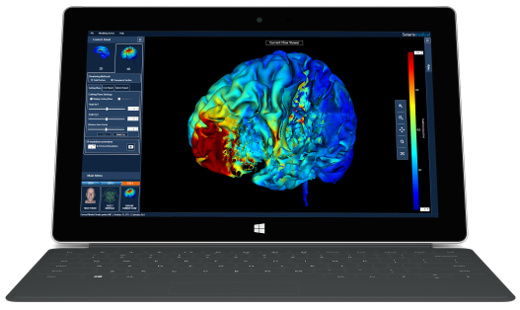
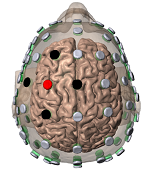
Optimization of electrode montage for brain targeting and individual subject customization has never been as earier as with Soterix Medical's Neurotargeting software. With recognition that placing an electrode "over" a target does not support rational tDCS does design, the Soterix Medical Suite of software tools allow simple and automatic optimization. Sotreix Neruotargeting software also provides high-resolution current flow visualization that can be used to support publications, presentation and proposals.